Dream intelligence
your dreams have been
telling you something.
Namoē listens to what your unconscious has been saying while you sleep, and remembers. Over many nights it learns what keeps surfacing in you, and shows you the pattern you were too close to see.
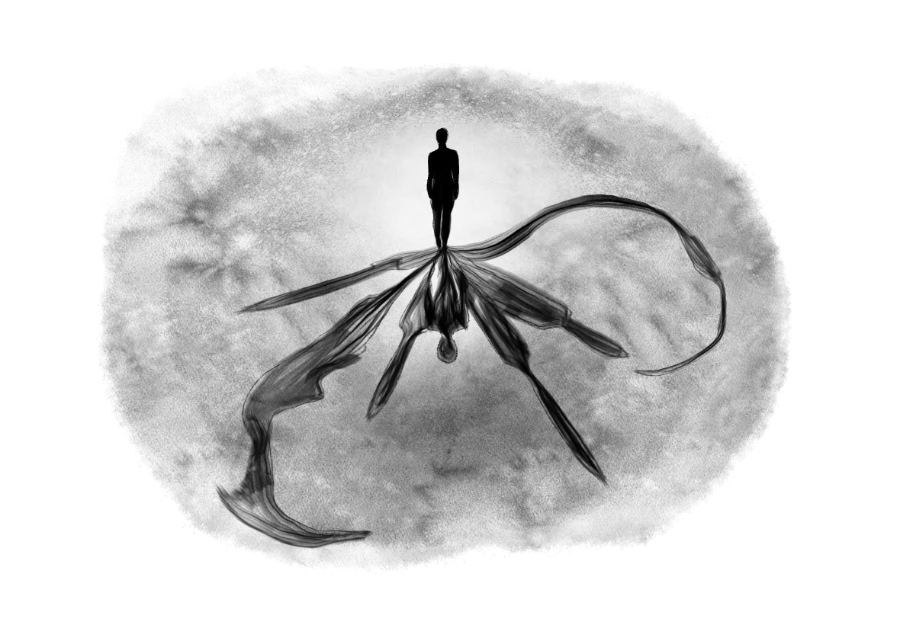
The problem with self-reflection
you can’t see your own blind spots.
Conventional personality tests rely on self-perception. But self-perception has a ceiling. The most important patterns in your psychology are the ones you can’t see from inside them: the recurring dynamic you keep finding yourself in, the quality you suppress before anyone else can, the thing everyone around you has noticed and nobody has said.
Every self-report instrument inherits the same flaw: it asks the narrator to describe the story. You answer as the person you believe yourself to be, on a good day, with an audience.
“Until you make the unconscious conscious, it will direct your life and you will call it fate.”
Carl Jung
Your dreams sit outside all of that. They’re produced by the part of you that isn’t managing how it appears, arriving unedited, before the narrator wakes up and gets to work. They’re direct messages from the subconscious, as honest as anything your mind produces.
Which means everything derived from them inherits that honesty. A reading built on your dreams tracks how you’re actually doing rather than how you’d report you’re doing. Namoē draws on the empirical dream research of Hall and Van de Castle and the depth psychology of Carl Jung to surface it. A mirror, held quietly.
How it works
three things happen
every time you dream.
Dream DNA
five dimensions.
one fingerprint.
Each dream is classified across five dimensions drawn from Hall and Van de Castle’s empirical content analysis. The most rigorous cross-cultural dream research ever conducted. Together they produce a fingerprint unique to that night.
you grasped at flowers that died in your hands while a child laughed at the rush.
Memory
it remembers
what you forget.
Most dreams are gone by breakfast. Namoē keeps them. Every dream you record joins the ones before it, and a picture no single night could show begins to assemble itself.
When a figure returns, Namoē knows it has returned. The third time water floods the same room, it counts. Recurrence is where meaning hides, and recurrence only reveals itself to something that remembers.
the house filled to the ceiling and you didn’t move.
a tide came up the stairs. calmer this time.
you were under it, and breathing.
The Global Pulse
what the world
dreamed last night.
Every dream recorded in Namoē contributes anonymously to a collective picture. The five dimensions aggregate across thousands of dreamers each night: globally, nationally, locally.
Jung spent his career arguing the collective unconscious was real. Namoē is the first instrument that can make it visible in real time. When fear dominates globally three Sundays in a row, the signal is worth paying attention to.
Your individual dream sits inside that picture. You’re contributing to something collective.
Jungian Archetype
what keeps surfacing
becomes who you are.
After enough dreams, a pattern emerges. Not from one night but from many. Namoē identifies which Jungian archetype keeps surfacing in your dream content and reveals what your unconscious is oriented toward right now.
Reflections
a mirror,
held quietly.
Based on your archetype, Namoē sends reflections. Something closer to what a mirror does: showing you what’s already there.
They arrive every few days. They’re drawn from your archetype and your recent dream pattern. They’re designed to produce one thing: the feeling that something was seen accurately.
The grounding
an experiment in application.
Namoē draws on established frameworks from empirical dream research and depth psychology. An ongoing experiment in application, intended for reflection.
“The dream is a little hidden door in the innermost and most secret recesses of the soul.”
Carl Jung
Jung spent his career arguing the collective unconscious was real: that all human psyches share a deep layer of inherited patterns that surface in dreams, myths, and symbols across every culture.
Namoē is the first application that can test that claim at scale. When the global pulse shifts, that’s the collective unconscious made visible in real time.
your dreams have been
telling you something.
Namoē helps you hear it.